GENESIS
Our Story
Genesis: The Unapologetic Dawn
It began not in the halls of power, but in the defiant glow of streetlights, in the sacred space of chosen sisters. The genesis of the Haus of Khameleon was an act of revolutionary existence. In a Fijian society woven with vibrant tradition and complex social strictures, we emerged not as a whisper, but as a collective roar. We were transgender women who looked a culture of silence and stigma in the eye and clapped back. We transformed survival into strategy, sisterhood into a fortress, and visibility into a weapon.
We became the first transgender-led movement in Fiji because we had to be. There was no precedent, only prejudice. No pathway, only barriers. Our very formation—a Haus, a family forged not by blood but by truth—was our first powerful statement. It declared: We are here. We are Fijian. And we will not be erased.
"We Are the Conversation"
The Haus of Khameleon’s most seismic achievement was this: we ripped the door off its hinges and let an entire nation’s conversation about being transgender flood in. We did not ask for permission to exist; we presented our existence as the undeniable agenda.
Our statement was made in every public march where sequins glittered beside sulu jaba, a stunning fusion of identity and indigenous culture. It was made in the courageous act of documenting our lives, putting names, faces, and stories to a reality many refused to acknowledge. We moved the discourse from abstract prejudice to human truth—from "those people" to our sisters, our daughters, our fellow citizens.
We didn't just join the conversation; we became the conversation. And in doing so, we fundamentally changed its terms. We shifted the narrative from pathology to personhood, from shadow to spotlight.
The Paved Way: From Conversation to Constitution
This was the paved way: we laid the first stones of a movement where there was only quicksand.
1. Rights Forged in Reality: Haus of Khameleon moved advocacy from theory to the tangible—fighting for safe housing, healthcare, protection from violence, and access to employment. We argued not for abstract concepts, but for the right to walk home safely, to see a doctor without humiliation, to work with dignity.
2. Organizing as Oxygen: Haus of Khameleon built the blueprint for transgender organizing in Fiji. We showed how to mobilize, how to support one another through crisis, how to create community-led solutions. The "Haus" model itself became a foundational structure for resilience and collective power.
3. Movement Building as Legacy: Haus of Khameleon’s greatest victory is the space we cleared behind us. By standing, unflinching, at the forefront, we made it possible for other LGBTQI+ and feminist movements in Fiji to stand stronger, with a more inclusive vision. We inspired a generation to live openly and taught a nation that transgender rights are human rights, inseparable from the Fijian promise of equality.
The Haus of Khameleon’s genesis was an act of audacious self-creation. Our powerful statement was our lived, brilliant existence. And the way we paved is now a road traveled by countless others, leading toward a Fiji where dignity is not a demand, but a destiny.
Haus of Khameleon were the mirror Fiji needed to see itself wholly. We are the architects of a more truthful future.
The Scorched Earth We Left for Convention
The true, provocative genius of our genesis lies in what we made impossible for those who followed. We scorched the earth of easy ignorance. After the Haus of Khameleon:
· No Fijian institution could credibly say, "We didn't know you existed."
· No future transgender Fijian could ever be told, "What you want is impossible."
· No conversation about human rights in Fiji could ever legitimately exclude transgender voices again.
Our genesis was, therefore, a hostile and glorious takeover of the narrative itself—an act of cultural reclamation in a country that had systematically written us out, where our very existence was a story left untold. We seized the pen from a history of silence to become the unapologetic authors of our own epic, transforming marginalization into a manifesto. Our power, born from this rupture, is the terrifying and beautiful power of a truth that could no longer be contained, a radiant and defiant force that forever altered the landscape from which we emerged.
The Unblinking Eye: A Narrative of the Haus of Khameleon
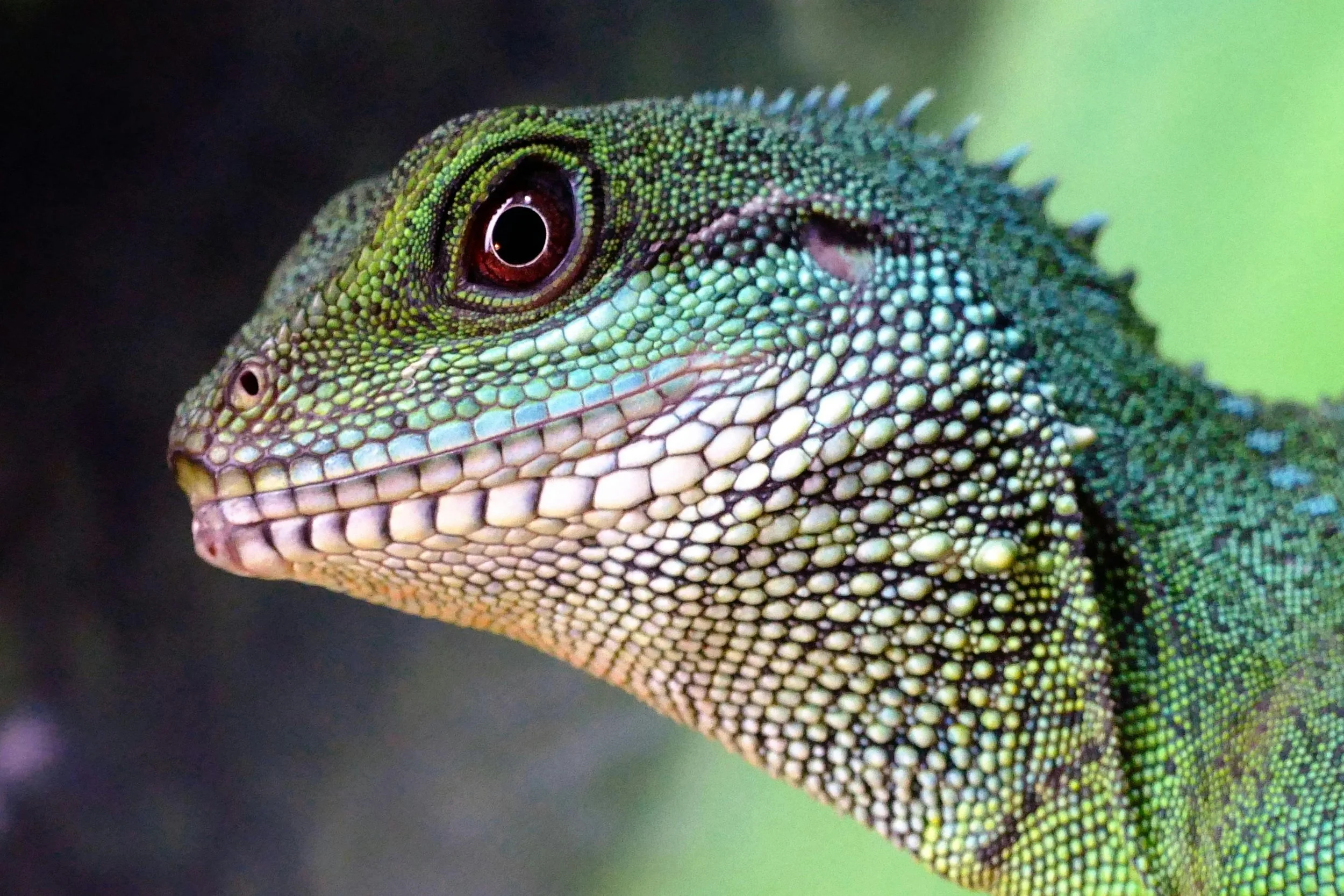
In Fiji, where the Pacific sun paints the sky in colors of fire and coral, survival is an art form. In the dense, emerald heart of some of the worlds forests, one of its greatest artists moves in silence: the chameleon. It is a creature of profound paradox—seen yet unseen, changing yet constant, gentle yet resilient. Its skin is a language, speaking in hues of mood and environment. Its eyes, twin turrets swiveling in independent orbits, see the world in a panoramic truth no other creature can perceive. It does not attack, but it does not flee. It holds its ground, blending when necessary, shouting in color when imperative, its grip on the branch unyielding.
This is also the story of a different kind of house: The Haus of Khameleon.
To be transgender in Fiji, where tradition casts long shadows and colonial-era laws linger like old ghosts, is to exist in a constant state of translation. You are translating your truth to family, to faith, to a society that often speaks only in binaries. The founders of the Haus, like the chameleon, learned to see the world differently first—a panoramic, painful truth of exclusion and violence. They saw how their community was pushed to the fringes, forced into the shadows of fields and the dim alleys of urban nights.
But the chameleon does not hate its skin; it masters it. And so, the Haus began its work.
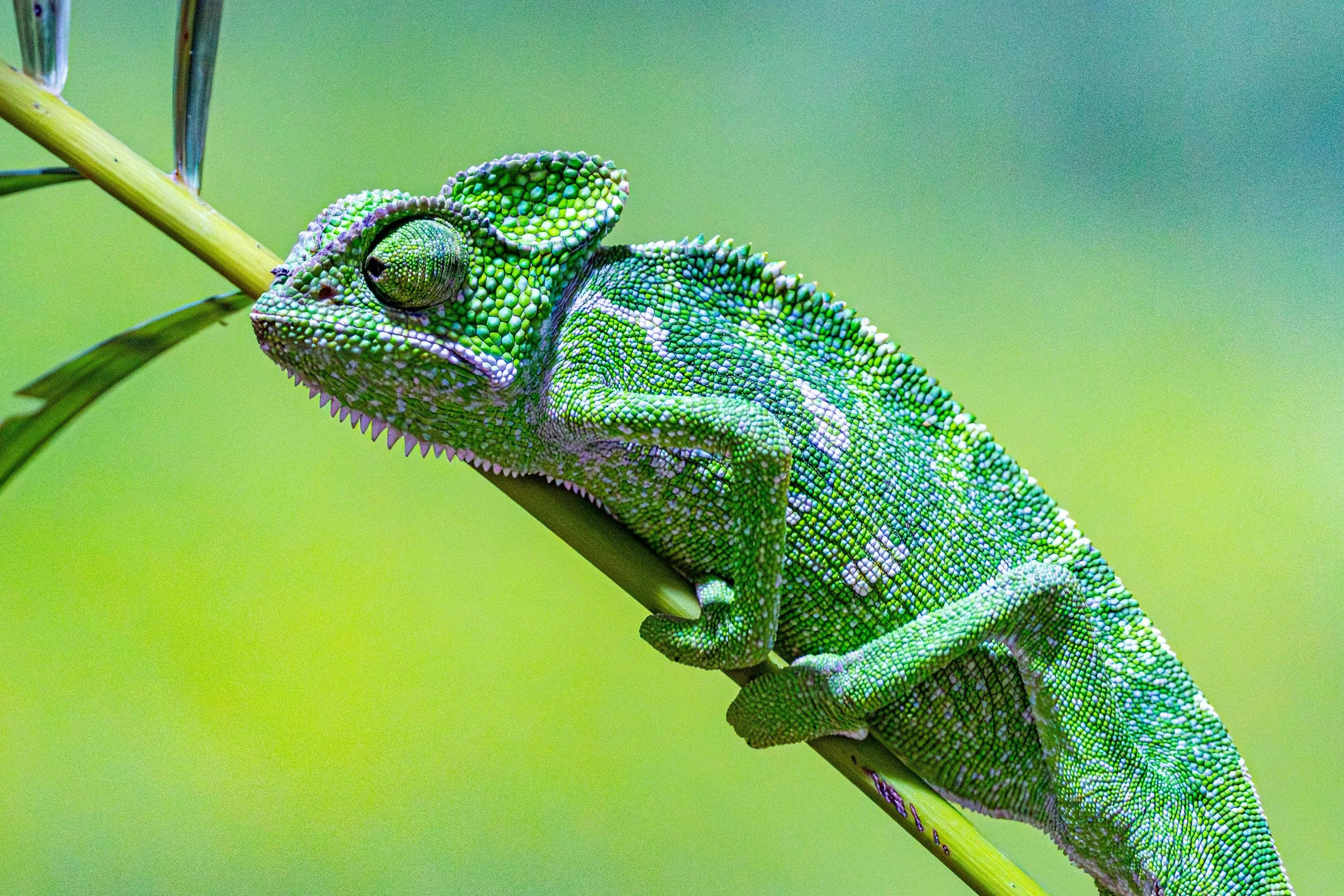
“Blending, at first, was not a choice, but a strategy for survival. Like the chameleon’s adaptive camouflage, they learned to navigate hostile environments. They spoke in codes, offered safe havens that looked like ordinary houses, used discretion not as a closet but as a temporary shield—a skin of protective coloration while they gathered strength. Their eyes, like those independent turrets, were always watching: one eye on the immediate danger, the other fixed on a distant horizon of justice.”
— Sulique Venus Waqa
Yet, the chameleon’s true power is not in hiding, but in its deliberate, magnificent revelation. When it needs to communicate—to attract a mate, to defend its territory—it erupts in impossible color. Electric blues. Vibrant yellows. A riot of defiant pattern. This is the Haus of Khameleon’s core advocacy. They stopped merely blending into a world that wanted them silent. They changed its color.
They became the unblinking eye that would not look away, documenting police brutality and discrimination. They became the voice that translated personal pain into public policy, challenging parliamentarians with their testimonies. They organized the first Pride marches in the Pacific, a slow, deliberate procession of brilliant color moving through Suva—not as a parade of spectacle, but as a statement of existence, a chameleon declaring itself to the forest. Each public training, each media interview, each courageous act of visibility was a flash of radiant, unignorable hue.
And like the chameleon’s zygodactylous feet—those uniquely fused toes that grip the branch with immovable strength—the Haus found its foundational hold. Its grip is not on power or prestige, but on community and Fijian tradition, reimagined. They rooted themselves in the indigenous concept of "vakavanua"—the way of the land—arguing that true Fijian culture has always had space for those who bridge genders, like the ancient "vakasalewalewa." They gripped the branches of faith, engaging with churches in dialogues of love and scripture. Their grasp is intimate, understanding every contour and texture of the society they navigate.
Today, the Haus of Khameleon stands as a creature of sublime paradox, just like its namesake. It is both gentle and unshakably strong. It is deeply local, its feet firmly on Fijian soil, yet its panoramic vision connects to a global struggle for dignity. It understands that to survive, sometimes you must change the conversation, shift the spectrum. But to thrive, you must never, ever let go of who you are at your core.
In the vast forest, the chameleon is a quiet testament to the art of being both a part of the world and apart from it, of seeing in all directions and moving with patient, transformative grace. In the heart of Fiji’s society, the Haus of Khameleon does the same. It is not just a movement. It is a living organism of change, a collective body that speaks in the vibrant, undeniable language of truth—its skin a story, its eyes fixed on the future, its grip on the branch of justice, forever sure.